

Want to develop your own recipes from scratch? Here are some of my best tips to get started.

I'm going to be honest with you here—a few years ago, I had absolutely no idea how to write a recipe from scratch. I remember searching far and wide online for tips but struggled to decide where to start.
But, honestly, when it comes down to it, developing recipes really isn't that hard! I'm going to focus more on writing baking recipes here just because, y'know, that's what my specialty is. However, you can definitely apply these concepts to writing savory recipes as well. Here are a few of my best tips to get started.
Research, Research, Research
The best part about researching food is that you get to eat all. the. food! When eating out at restaurants or bakeries, start to think a bit more about the foods you are eating and analyze their components. Why does that chocolate lava cake pair so well with matcha ice cream? What is it about lemon juice that brings out the flavor in that broccoli?
Another way I love to get inspiration is by combing through cookbooks and magazines. See what kinds of recipes people are making and analyze the flavors they are using. Learn what fruit is in season at different times of the year. As you start to recognize patterns in dishes, you find ways to incorporate these ideas into your own recipes. It's also important to know what flavors pair well together and incorporate these combinations in your baking.
Finally, when it comes to baking, understanding the science behind it all is unbelievably important. Why do you use baking soda in a recipe instead of baking powder? Does it matter if you use all-purpose flour or cake flour? The more you learn about baking science, the easier it will be to know which ingredients to pair together in your own recipes. If you are interested in learning more about the science of baking, I highly recommend checking out Paula Figoni's book How Baking Works.
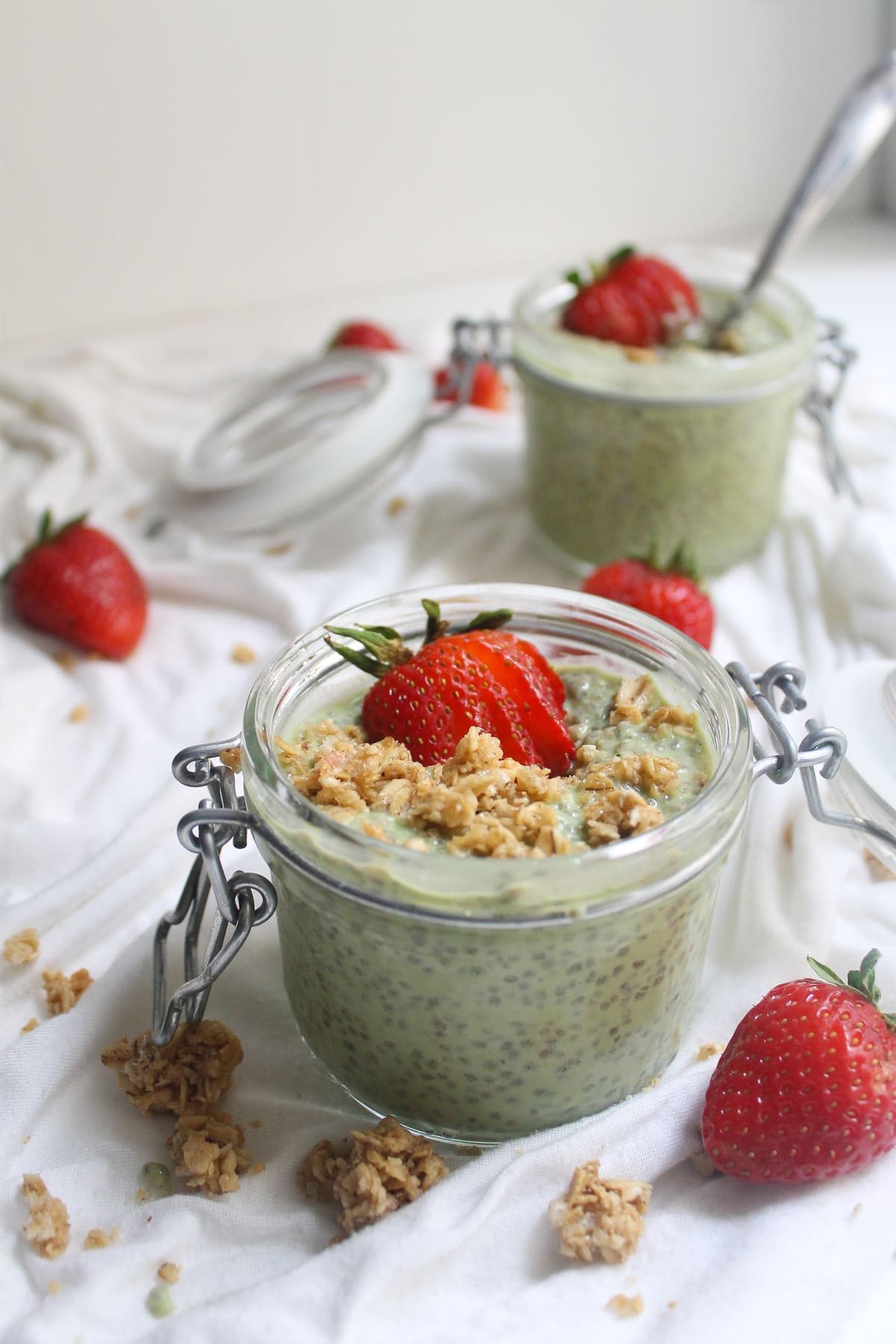
Perfect for summertime, this Coconut Matcha Chia Pudding incorporates two of my favorites: matcha and strawberries.
Give a Recipe a Unique Twist
When it comes to recipes, one of my favorite ways to develop new ones is to shake up an old one. Take snickerdoodle cookies and turn them into scones or change a sweet potato casserole into a cheesecake.
When making changes like this, you don't have to go too crazy! Just think of ways that you can modify an existing recipe and improve it in some way. Try adding a new flavor such as basil or coriander, or experiment by changing the cooking method. Honestly, this is the fun part about creating your own recipes: you get to be creative and think outside the box.
As I'm writing my recipes, I like to use pre-existing ones for inspiration. However, I always make sure I change at least three components in a recipe and rewrite the instructions in my own words before calling it my own. I'm going to share a post soon about specific steps for writing recipes, so stay tuned for that.

Move over snickerdoodles—these Snickerdoodle Scones are here to stay.
Test as Many Times as Necessary
Chances are your recipe isn't going to be amazing the first time around. It might take two or three (or five... or six...) times to really get a recipe to the place you want it, and that's okay.
When I'm working on a recipe, I like to make one change at a time. If you change too many elements at once, it can become hard to tell what's working and what's not. Take it slow, and enjoy the process!
It's also important to keep in mind that recipes may fluctuate depending on your oven and your environment. When possible, I like to try out my recipes in a different kitchen to make sure they turn out as intended.
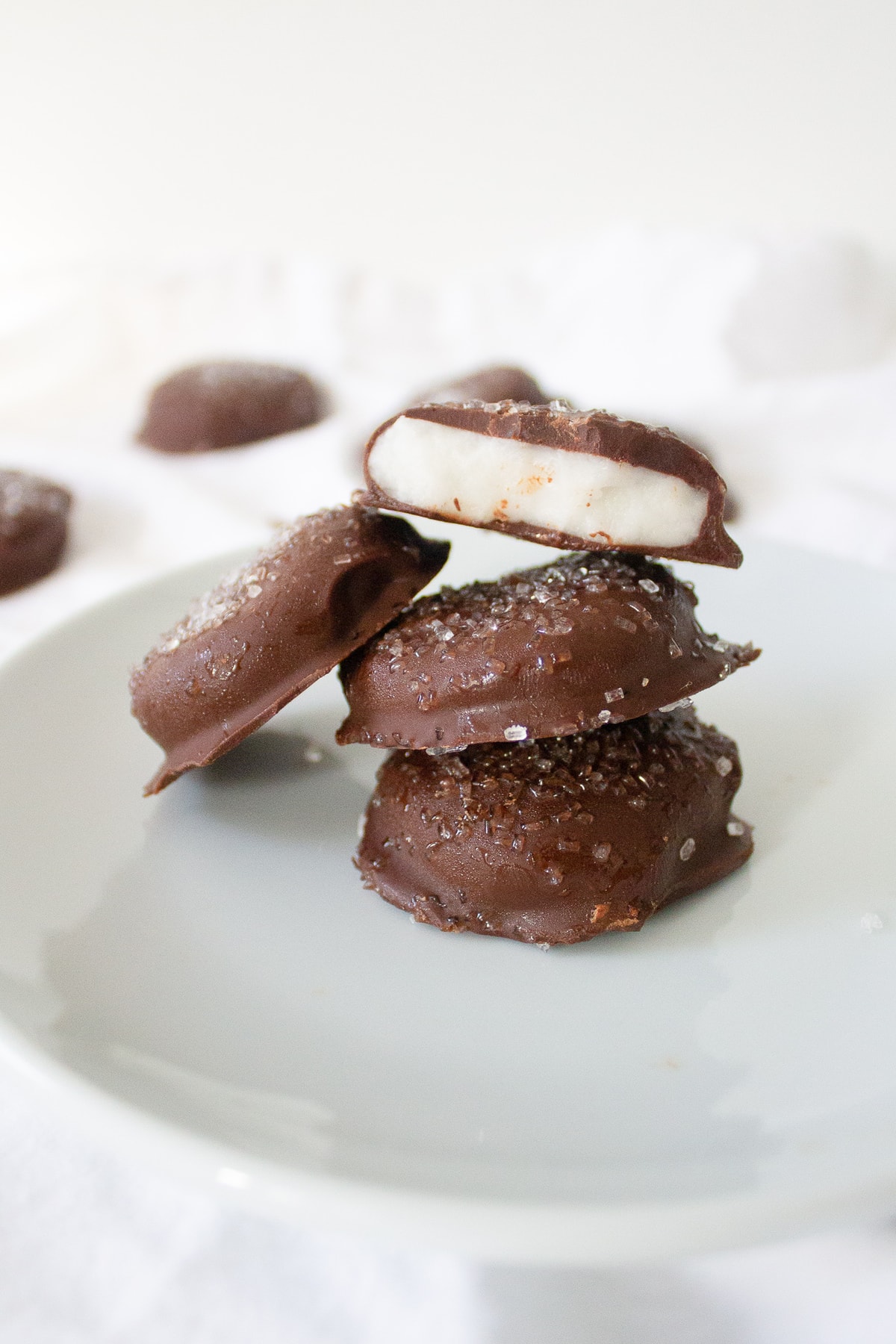
It took me several weeks to get the recipe for these Homemade Peppermint Patties down.
Learn From Your Mistakes
Just like everything else in life, developing recipes is always going to have its fair share of failures. Your idea might take several tries to come to fruition, or it just might not work out at all. And that's okay! The most important lesson is to enjoy the process and keep trying. The more recipes you work on, the better you will become at this process.
Over time, I have made many mistakes in the kitchen. From sunken-in cakes to raw cream puffs, I have wanted to throw in the towel at various points over the past few years. But, the best thing you can do is to pick yourself back up and keep trying. Learn from every experience and enjoy the process.

On my first attempt at these Maple Pecan Cream Puffs, I messed up the ratios for the choux pastry. It was a little bit embarrassing tossing all those cream puffs in the trash. You live and you learn, right?
Keep Track of New Ideas
When it comes to thinking of new recipes, I keep a long-running list of all my ideas (good and bad). To manage my blog content, I do this on a board in Asana. I have a column called "Idea Backlog" filled with hundreds of recipe ideas, and when I plan out my editorial calendar, I pull from these recipes and give them a try.
Even if you don't have a blog, you can keep track of all your recipe ideas in a similar way! Whether it's in a small notebook or in the notes section of your phone, write down ideas as they pop into your head. Browse through the farmers' market and see which fruits are in season, then jot down flavor combinations that sound enticing. Even if you don't try to bring these recipes to life for months, it's great to have the idea written down for later.

Inspired by my favorite cookie, these Vegan Peanut Butter Blossoms taste just as good as the original.


Hi Leslie! This is a great article-- thank you! In it you mentioned that you were going to share a post soon about specific steps for writing recipes... where could I find that? This is a tough topic to find helpful information on so any advise you could share would be appreciated!
Thank you!
Ann Kite
Hi, Ann! I haven't gotten around to writing that post yet, but it's great to know it would be helpful for you. In the meantime, I'd recommend checking out this article from Mike Bakes NYC that talks all about developing and writing recipes! It dives into some of the concrete steps required when writing recipes.
Hii I was just wondering how to claim the recipe to be yours, because I use peoples recipes, but add things to it. like I use peoples recipes as a base then, implement it from there by adding other ingredients in there. Can I classify the recipe as mine then or would it still be there’s?
Hi, Enara! Great question. I personally like to follow David Lebovitz's guide to recipe attribution. If I take another person's recipe and change a few of the ingredients/instructions and write the recipe in my own words, I usually classify it as my own recipe at that point. However, I always like to provide a link to that other person’s recipe on their website/blog/cookbook and say 'Recipe inspired by X' or 'Recipe adapted from X.'
I hope that helps!
But i want to learn how to make my own recipes but I don’t know where to start from and how to do it I’m confused
I'd start by taking a look at some of your favorite recipes. Is there anything you can tweak to make the recipe your own? You could adjust some of the ingredients or change the cooking method, and making these changes will help you create a new recipe. Once you get the hang of doing that, you might find it easier to start developing your own recipes from scratch.
For more information about this topic, I really like this article from Taste of Home, and I think it might give you a few other places to start. I hope that helps!